
Defense Systems PCB Manufacturing
In modern defense systems, electronic reliability isn't just a requirement—it's the absolute bedrock of mission success and national security. From the vigilant eyes of radar arrays to the secure whispers of communication systems, from the pinpoint accuracy of guided munitions to the persistent watch of surveillance platforms, every function hinges on a printed circuit board (PCB) that can defy extreme environments and operational stress. Unlike consumer electronics that chase rapid iteration, defense-grade PCB manufacturing is a covenant for "permanence." It must underpin product lifecycles spanning decades, meet compliance standards that push the boundaries of rigor, and adhere to a "zero-defect" philosophy. This article aims to be your strategic guide, illuminating the intrinsic logic and core challenges of military-grade PCB manufacturing—from the first prototype to full-scale production.
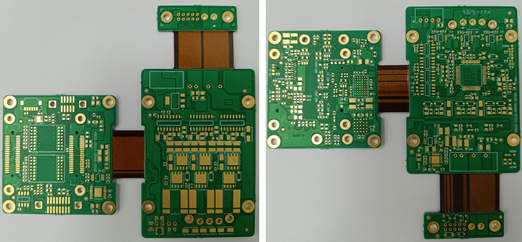
Chapter 1: Military PCB Manufacturing — Defining the Ultimate Standard of Reliability
The demands defense systems place on a PCB are an order of magnitude beyond commercial expectations. It must endure decades of service, resisting relentless vibration, extreme thermal cycling, corrosive humidity, violent shock, and complex electromagnetic interference—all while ensuring every electrical signal remains flawless. This requires the manufacturing process itself to be a systematic engineering endeavor: starting with meticulously selected materials, through precise control of every production step, complemented by exhaustive testing and verification, and supported by comprehensive documentation—all converging to forge unshakable long-term reliability.
Chapter 2: Why Defense Electronics Demands a Distinct Manufacturing Paradigm
Defense electronics and commercial products are fundamentally different from the outset, due to several core distinctions:
· Ultra-Long Lifespan: 10–30 years of service demand products engineered to withstand time-induced degradation.
· Extreme Operational Environments: From the crushing depths of the ocean to the thin air of high altitudes, from desert heat to Arctic cold—PCBs must be masters of environmental adaptability.
· Mission-Critical Imperative: Any minor failure can cascade into strategic mission failure; the margin for error is virtually zero.
· Stringent Regulatory Frameworks: A comprehensive system of standards and traceability covering design, materials, processes, and testing is the non-negotiable entry ticket.
Thus, high-reliability manufacturing isn't merely an "enhancement"—it's the only viable path to ensure equipment maintains consistent performance throughout its lifecycle.
Chapter 3: The Pivotal Roles of PCBs in Defense Systems
· Communication and Radar — The "Nervous System" of Defense: Radar and secure communication systems are the "eyes" and "ears" of defense, relying heavily on RF and high-frequency PCBs. These boards are like precision instruments, requiring strict impedance control, ultra-low-loss substrates, and exceptionally stable dielectric properties to ensure signal purity and integrity in complex environments.
· Weapon Systems — The "Intelligent Core": Fire-control and guidance electronics are the "brains" of weapons, depending on complex multilayer and HDI (High-Density Interconnect) PCBs. They handle the most critical timing commands, data streams, and power distribution. Here, reliability isn't a metric—it's an absolute, non-negotiable tenet.
· Avionics and Reconnaissance — The "Lightweight Armor": Avionics, ISR (Intelligence, Surveillance, Reconnaissance) platforms, and surveillance systems demand PCBs that are compact, lightweight, yet integrate powerful functionality while offering excellent thermal management and resistance to vibration and altitude-related stress.
Chapter 4: Prototyping Phase — Laying the First Pillar for Reliability
· Materials: Choosing Your "Comrades-in-Arms": High-Tg FR-4, polyimide, and advanced high-frequency laminates are the staples of military PCB manufacturing. Material selection directly determines the circuit board's heat resistance ceiling, electrical performance floor, and long-term operational confidence.
· Signal Integrity: The Art of Racing Against Interference: High-speed and RF circuits are like transmitting information on a tightrope. Carefully engineered stackups, precise trace geometry control, and tight fabrication tolerances are the only way to ensure signals arrive clearly and on time in complex electromagnetic environments.
· Thermal and Power Management: The Power of Calm: High power density is the norm. Using thick copper layers to enhance current-carrying capacity, designing thermal vias to build heat dissipation channels, and optimizing power plane structures for stable supply—all aimed at maintaining calm and efficiency within confined spaces.
Chapter 5: Prototyping — The Proving Ground for Theory
· Rapid Prototyping: The First Heartbeat from Design to Reality: Prototyping isn't just about "making a sample." For defense projects, prototypes must be fabricated using production-intent materials and processes to truly validate electrical performance, mechanical fit, and system integration.
· Design Validation and Testing: Hunting for Cracks Under a Microscope: Prototype boards undergo rigorous electrical testing, functional verification, and early-stage environmental stress screening. The goal is to expose all potential risks before committing to large-scale resources.
· Design for Manufacturability (DFM) Review: Bridging Design and Manufacturing: A thorough DFM review is the critical bridge between brilliant design and robust manufacturing. Experienced manufacturers like I-tech Electronics provide invaluable engineering feedback at this stage, significantly reducing technical and management risks during the transition to production.
Chapter 6: Certification, Compliance, and Documentation — The "ID Card" and "Family Tree" of Military Manufacturing
· IPC Class 3 and Military Standards: The Gold Standard of the Industry: The vast majority of military PCBs are manufactured to IPC Class 3, the highest reliability level defined by IPC standards. Specific projects may also require compliance with more stringent MIL-PRF specifications.
· Traceability and Data Security: Non-Negotiable Imperatives: Every batch of material, every step of the process must be fully traceable. Secure handling of technical data and confidentiality are non-negotiable prerequisites for collaboration.
Chapter 7: Transitioning from Prototype to Volume Production — Crossing the Chasm Between Lab and Factory
· Scaling Challenges: Moving from small-scale prototyping to stable production introduces challenges like yield consistency, process repeatability, and supplier qualification.
· Process Control and Yield Optimization: Driving Stability with Data: Statistical process control, standardized work instructions, and continuous production monitoring ensure consistent quality across batches.
· Supply Chain Resilience: A Commitment for Decades: Defense projects require a supply chain that can withstand material obsolescence and geopolitical volatility—a strategic capability in itself.
Chapter 8: Volume Production — Long-Termism in Stability
· High-Mix, Low-Volume vs. Sustained Medium-Volume Output: Defense production models vary—some involve highly customized small batches, others require sustained medium-volume output over years. The manufacturing system must be flexible and stable.
· Automation and Consistency: Selective automation in key areas improves repeatability while maintaining the tight tolerances required for high-reliability PCBs.
· Long-Term Reliability Validation: The Test of Time: Reliability testing doesn't end with production launch. Ongoing environmental and life-cycle testing verify that products meet performance commitments throughout the project lifecycle.
Chapter 9: Quality Assurance and Testing — The Last Line of Defense
· Full Inspection Philosophy: Military PCBs typically undergo 100% electrical testing and automated optical inspection, leaving no room for defects.
· Environmental Stress Screening: Simulating the "Proving Grounds" of Real-World Operations: Thermal cycling, vibration testing, and humidity exposure simulate the harshest operating environments, weeding out early failures.
· Failure Analysis and Continuous Improvement: Learning from Every Setback: When issues arise, structured failure analysis drives continuous improvement in design and manufacturing processes.
Chapter 10: Cost Considerations — Finding the Optimal Balance for "Absolute Reliability"
· Prototype vs. Volume Production Cost Logic: Prototypes carry higher per-unit costs due to setup, engineering, and low volumes. Volume production benefits from process optimization and yield improvements.
· Key Cost Drivers: Layer count, material type, board thickness, impedance control, testing level, and documentation complexity collectively shape pricing.
· Typical Price Ranges (Based on Industry Experience):
o Prototype PCB (2–6 layers): 300–300–1,200 per batch
o Prototype HDI/High-Frequency PCB: 800–800–2,500 per batch
o Low-Volume Production (50–200 pcs): 40–40–180 per board
o Medium-Volume Production (500–2,000 pcs): 15–15–80 per board
o Actual pricing depends on technical complexity and compliance scope.
Chapter 11: Choosing a Manufacturing Partner — Finding a "Comrade-in-Arms" You Can Trust
An ideal defense PCB manufacturing partner should demonstrate:
· Proven military project experience
· Mature IPC Class 3 production capability and quality systems
· Comprehensive traceability and documentation control
· Reliable technical data security and long-term project support capabilities
I-tech Electronics, as such a supplier, offers end-to-end services from rapid prototyping to stable volume production, with engineering-driven quality control as the foundation for meeting defense-grade demands.
Chapter 12: Future Trends — The Manufacturing Blueprint for Next-Generation Defense Electronics
Technological evolution never stops. The future of military PCB manufacturing will see higher layer counts, broader HDI adoption, advanced materials, and tighter integration between PCB fabrication and electronic assembly—continuously raising the bar for high-reliability manufacturing.
Chapter 13: Conclusion — Victory Through Systematic Engineering
Successful defense system PCB manufacturing is a precise systematic engineering endeavor spanning design, engineering, and production. It demands disciplined engineering, certified reliable processes, and a trustworthy manufacturing partner. Only when design intent, controlled manufacturing, and rigorous testing align perfectly can defense electronics consistently deliver卓越 performance from prototype through decades of service.
Chapter 14: Frequently Asked Questions
1. What is the most fundamental difference between defense and commercial PCB manufacturing?
The core distinction lies in the uncompromising pursuit of extreme reliability, ultra-long lifecycle support, absolute strict standards, and full traceability.
2. Must all defense PCBs meet IPC Class 3?
Mostly yes—IPC Class 3 is the baseline. Many projects also impose additional military standards.
3. What's the typical lead time for defense PCB prototyping?
Usually 5–15 working days, depending on design complexity and material availability.
4. Can one manufacturer handle both prototyping and volume production?
Absolutely, and it's highly beneficial. Partnering with a single qualified supplier like I-tech Electronics ensures technical consistency and significantly reduces transition risks.
5. How to optimize costs without sacrificing reliability?
The key is early involvement: Collaborate on DFM during design, optimize material selection to avoid over-engineering, and establish clear production plans. These measures control costs at the source while preserving reliability.