
AS9100 Standards for Aerospace PCB Manufacturing:
In aerospace electronics, failure is simply unacceptable. Printed circuit boards (PCBs) deployed in flight control systems, satellite communication modules, and defense radar platforms must perform perfectly amid extreme operating conditions—including intense vibration, extreme temperature fluctuations, radiation exposure, and extended service lifespans.
This is precisely why the AS9100 aerospace PCB manufacturing standards are indispensable for upholding quality, enabling full traceability, and managing operational risks. For aerospace original equipment manufacturers (OEMs) and avionics engineers, partnering with an AS9100-certified aerospace PCB manufacturer is far more than a preference; it is frequently a contractual obligation.
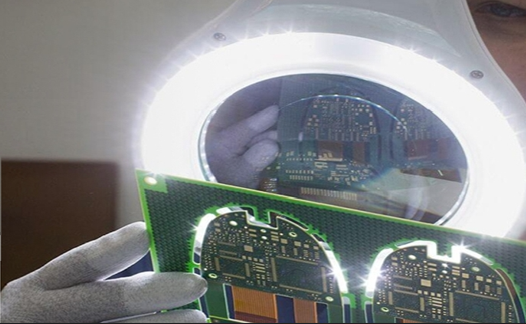
This guide breaks down the technical specifications, certification workflow, cost drivers, and sourcing criteria for AS9100-compliant aerospace PCB fabrication and assembly.
1. Introduction to AS9100 in Aerospace Electronics Manufacturing
AS9100 is a specialized quality management system (QMS) standard crafted for the aerospace sector. It is built on the foundation of ISO 9001 and incorporates additional aerospace-specific mandates, such as:
Risk-informed decision-making
Product safety governance
Configuration oversight
Anti-counterfeit component measures
Robust traceability infrastructures
In aerospace PCB production, AS9100 guarantees consistent manufacturing practices across multilayer PCB fabrication, high-reliability PCB assembly, and ongoing lifecycle support services.
2. What Is AS9100?
AS9100 is a globally recognized aerospace quality management standard released by the International Aerospace Quality Group (IAQG).
It expands on ISO 9001 by adding aerospace-focused requirements, including:
Product safety planning protocols
Risk reduction frameworks
Supplier oversight and control mechanisms
First Article Inspection (FAI) documentation compliance
Rigorous configuration management processes
For aerospace PCB manufacturers, AS9100 certification is proof of adherence to the quality benchmarks set for the aviation and defense industries.
3. Why AS9100 Matters in Aerospace PCB Manufacturing
Aerospace circuit boards are integral to a range of critical systems:
Flight control systems
Avionics signal processing units
Satellite communication payloads
Military radar and guidance systems
Any failure in these components can lead to devastating safety hazards and substantial legal and financial liability.
AS9100 aerospace PCB standards are instrumental in ensuring:
Regulated manufacturing workflows
Complete end-to-end traceability
Formalized inspection procedures
Proactive risk management strategies
These measures lower failure rates and boost the long-term operational dependability of aerospace electronics.
4. Key Requirements of AS9100 for PCB Manufacturers
AS9100-certified aerospace PCB manufacturers are required to implement the following core measures:
Risk-Based Operational Control
Every stage of production must be assessed for potential risk impacts, with heightened scrutiny for high-layer-count PCBs and HDI (High-Density Interconnect) boards.
Full Product Traceability
Each PCB batch must be traceable to its source materials and components, including:
Raw laminate lot identification numbers
Copper foil suppliers
Surface finish chemical formulations
Assembly components (for PCB assembly, or PCBA)
Supplier Qualification
Only materials from approved vendor lists (AVL) may be used in aerospace PCB fabrication.
Configuration Management
All engineering design changes must be fully documented and controlled to prevent unapproved deviations from original specifications.
5. Material Control Under AS9100 Standards
Material reliability is a cornerstone of aerospace electronics performance, and AS9100 enforces strict material control requirements:
Use of certified aerospace-grade laminates (e.g., high-Tg FR4, polyimide)
Comprehensive lot traceability documentation
Strict moisture sensitivity management
Controlled storage conditions for all raw materials
High-reliability aerospace PCB fabrication typically utilizes materials rated to operate in temperatures ranging from -55°C to +125°C and beyond.
6. Process Control in Aerospace PCB Fabrication
Process validation is a mandatory requirement under AS9100 aerospace PCB manufacturing standards, encompassing:
Regulated lamination cycles
Drill parameter validation and calibration
Real-time plating thickness monitoring
Precise controlled impedance verification
Implementation of Statistical Process Control (SPC) methodologies
Manufacturers must maintain detailed, up-to-date process control plans and equipment calibration records at all times.
7. Inspection and Testing Requirements
The inspection standards for aerospace PCBs are significantly more stringent than those for commercial-grade PCBs. Typical quality inspection protocols include:
Automated Optical Inspection (AOI)
X-ray inspection to verify BGA and via integrity
Electrical testing via flying probe or bed-of-nails systems
Microsection analysis for structural validation
Completion of First Article Inspection (FAI) documentation
FAI is a mandatory step for all new aerospace PCB part numbers.
8. Documentation and Traceability Systems
Comprehensive documentation is the foundation of AS9100 compliance, requiring manufacturers to implement robust systems for:
Manufacturing traveler records
Digital process logging
Batch and serial number tracking
Non-Conformance Reports (NCR) for defective units
Corrective Action Reports (CAR) to address root causes
Aerospace OEMs often mandate record retention periods of 10 to 30 years for all production and inspection documentation.
9. Risk Management and Failure Prevention
AS9100 requires manufacturers to take a proactive approach to risk mitigation, with common strategies and tools including:
Failure Mode and Effects Analysis (FMEA)
Root Cause Analysis (RCA) for any quality issues
Corrective and Preventive Action (CAPA) plans
Strict counterfeit component control protocols
Preventing counterfeit electronic components is a particularly critical priority in aerospace PCB assembly.
10. AS9100 vs IPC Class 3: Understanding the Differences
IPC Class 3 sets forth workmanship standards for high-reliability electronic components, but it is distinct from AS9100 in key ways:
IPC Class 3 centers on product-specific quality criteria and workmanship standards.
AS9100 focuses on organizational quality management systems and enterprise-wide risk management.
Nearly all aerospace PCB projects require compliance with both AS9100 and IPC Class 3 standards.
11. AS9100 Certification Process for PCB Manufacturers
The AS9100 certification process for PCB manufacturers follows a structured workflow:
Gap analysis to identify areas of non-compliance with the standard
Internal audits to assess existing processes and documentation
Comprehensive process documentation and system refinement
Stage 1 audit: Independent review of all documentation
Stage 2 audit: On-site verification of manufacturing processes and compliance
Certification is not permanent; manufacturers must renew it annually through regular surveillance audits.
12. Applications of AS9100 Aerospace PCBs
AS9100-compliant aerospace PCB fabrication is widely used in the production of critical aerospace and defense electronics, including:
Avionics control boards
Satellite RF modules
UAV flight controllers
Missile guidance electronics
Radar processing systems
High-layer-count multilayer PCBs (8–24 layers) are a common choice for these complex, high-performance systems.
13. Cost and Lead Time Considerations for AS9100 PCB Manufacturing
AS9100 aerospace PCB manufacturing incurs higher costs than commercial PCB production due to several key factors:
Significant documentation overhead
Expanded and more rigorous inspection requirements
Sourcing costs for certified aerospace-grade materials
Typically smaller production volumes for aerospace projects
Typical Aerospace PCB Fabrication Cost (USD)
PCB Type | Layer Count & Specification | Typical Price Range |
4-Layer Aerospace PCB | Low volume prototype | $180 – $400 per board |
8-Layer Aerospace PCB | Controlled impedance | $350 – $800 per board |
12–16 Layer PCB | High-reliability build | $900 – $2,500 per board |
Lead Times
Prototype production: 2–4 weeks
Small batch production: 4–8 weeks
Final costs vary based on stack-up complexity, surface finish type (e.g., ENIG, hard gold), and custom documentation requirements set by aerospace OEMs.
14. Choosing the Right AS9100 Aerospace PCB Manufacturer
When selecting an AS9100-certified aerospace PCB manufacturer, key evaluation criteria include:
Current and valid AS9100 certification status
Historical audit performance and compliance records
Maturity and robustness of traceability systems
Proven experience with avionics and defense programs
Demonstrated capability to meet IPC Class 3 compliance standards
For example, I-tech electronics co.,ltd delivers aerospace-grade PCB fabrication solutions that align fully with AS9100 quality management requirements. The company’s manufacturing workflow integrates:
Strictly controlled material sourcing from approved vendors
Complete batch traceability across all production stages
Expertise in high-reliability multilayer PCB fabrication
Adherence to IPC Class 3 workmanship standards
This integrated approach makes I-tech electronics co.,ltd a reliable partner for aerospace OEMs in need of dependable PCB and PCBA services supported by comprehensive, documented quality control processes.
15. Future Trends in Aerospace PCB Manufacturing Standards
The aerospace industry is undergoing a shift toward more advanced and digitalized manufacturing practices, with key trends in PCB manufacturing standards including:
Digitalization of all manufacturing records and documentation
Adoption of blockchain-based traceability solutions
Implementation of AI-driven defect detection and quality control
Use of advanced low-loss materials for high-frequency aerospace systems
Deeper integration of AS9100 with cybersecurity standards for electronic systems
As avionics systems grow increasingly complex, aerospace PCB quality standards will continue to evolve to meet new industry demands.
16. Conclusion
AS9100 aerospace PCB manufacturing standards are essential for safeguarding the safety, reliability, and traceability of flight-critical electronic components.
For aerospace OEMs, defense contractors, and satellite system integrators, partnering with an AS9100-certified aerospace PCB fabrication and assembly provider reduces operational and quality risks, while ensuring compliance with the strict quality expectations of the aviation and defense sectors.
When evaluating potential suppliers, top priorities should include:
Verifiable, current AS9100 certification
Demonstrated IPC Class 3 compliance capability
Robust, well-documented quality management systems
Extensive hands-on experience with aerospace projects
In aerospace electronics, quality is not an afterthought achieved through post-production inspection—it is engineered into every stage of PCB design, fabrication, and assembly.